Skip to content Transforming your infrastructure into living assets
Contact Us

Settlement Monitoring

Settlement monitoring tracks how far the ground, foundations, and structures move under changing conditions, so a project team catches the movement as it develops instead of after it threatens an adjacent structure, embankment, or roadway.

Settlement monitoring combines automated geotechnical instrumentation, precise survey methods, and real-time data acquisition, and Sixense runs it on construction sites across the US and Canada. Every reading ties to a fixed benchmark set outside the zone of influence, so you know how far a foundation has actually dropped, and when to act on it.


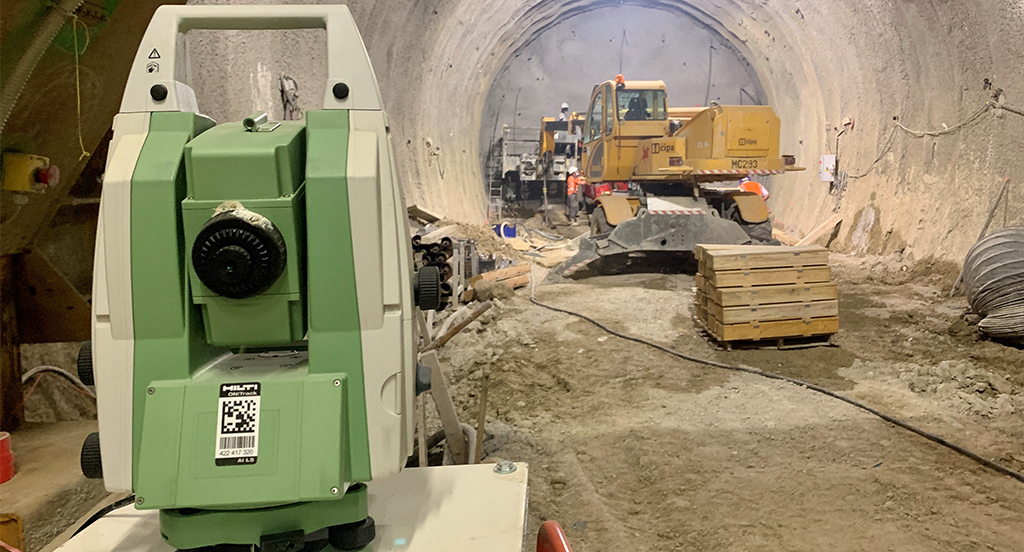
Cyclops - AMTS

Discover Our Settlement Monitoring Services

Settlement monitoring at Sixense runs as a turnkey service: we select the instruments, install them, acquire the data, and report on what the ground and the structure above it are doing. The program covers deep excavations, embankments, dams, and tunnels, and each one is matched to the soil profile, the foundation type, and the risk, built on the same geotechnical monitoring practice our teams use across the US and Canada.

  • Automated Surface and Subsurface Measurement: Settlement plates, hydrostatic level cells, borehole extensometers, and in-place shape array monitoring capture movement at the surface and at depth, so a slow loss of elevation under a foundation shows up as data instead of a crack. Dataloggers handle real-time data acquisition, which replaces the manual survey rounds only available after a scheduled site visit.
  • Precise Optical and Satellite Measurement: An automated motorized total station tracks survey prisms with millimetric precision, cycle after cycle, while satellite InSAR monitoring maps ground deformation across an entire corridor with no equipment on site. Both methods return displacement information without stopping work.
  • Real-Time Data and Alert Management: Every sensor reports into one geotechnical monitoring software platform, Beyond Monitoring, which plots displacement trends and live plan views as readings arrive. When a value exceeds a project tolerance, the platform sends email and text alerts to the project stakeholders, and automated reports keep the records organized for the owner and the engineer of record.
  • Structural Response Assessment: Settlement readings obtained in an area can be correlated with structural monitoring data available on each individual structures. Thresholds can be configured on both A reading only means something next to the behavior of the building above it, so we correlate it with structural monitoring data from the adjacent structure. That separates the movement a structure absorbs from real structural distress, and tells you which one you are dealing with.

Why Choose Sixense for Settlement Monitoring?

Decades of Geotechnical Monitoring Expertise

Sixense has spent nearly 30 years developing monitoring instrumentation and running programs for slope stability and settlement of embankments, dams, and foundations. Our monitoring teams have read the ground under densely populated areas, highways, transit tunnels, and deep excavations across the US and Canada. That history tells us how and when the soil behaves the way models predict and which areas require a tighter tolerance.

Integrated Instrumentation and Survey Methods

Against a program built around a single instrument line, Sixense matches the method to the problem: geotechnical sensors in the ground and an automated total station on the surface. Every geotechnical sensor and every survey prism feeds into the integrated data management system Beyond Monitoring. This helps project teams across the US and Canada quickly correlate information.

Real-Time Data Acquisition and Remote Alerting

Movement is usually slow and silent, which is why a gap between site visits is where a project may miss critical information. Dataloggers transmit readings around the clock to a central platform, and remote alerting reaches your phone in real time instead of at the end of a reporting cycle. The records keep building overnight, on weekends, and in the middle of a concrete pour or excavation sequence.

Dedicated Local Technical Teams

With offices in Bothell, Los Angeles, Austin, Silver Spring, Denver, Toronto, and Burnaby, our engineers and field technicians can be on site quickly. They handle installation, calibrate what is already installed, and maintain the network through the full project lifecycle. Local teams shorten response time, and a sensor serviced on schedule is the difference between a program that protects safety and one that quietly stops reporting.

Our Settlement Monitoring Process for Construction Projects

Every settlement monitoring program runs through the same 4 steps, tuned to each individual site. The goal is not to document the movement after the fact, it is to catch it early enough to prevent damage.

1

Site Assessment and Monitoring Design

We read the site before anyone breaks ground: the soil profile, the foundation type of each adjacent building, and the mechanisms in play, including consolidation of soft soil, dewatering, excavation unloading, and tunneling-induced ground loss. That review defines the instrument types, the sensor positions, the reference benchmarks outside the zone of influence, and the alert tolerances. The design is where the risk gets priced in, so soft clay beside a shallow-founded neighbor earns a denser, tighter program than a site on competent till.

2

Instrument Installation and Baseline Readings

Once the design is locked, crews handle installation: settlement plates, hydrostatic level cells, borehole extensometers, shape arrays, and survey prisms go in at the positions the assessment identified. Every installed sensor then records a baseline measurement before loading, filling, or excavation begins. Without that starting point documentation, a later reading would only show a number but not a change.

3

Continuous Data Acquisition and Real-Time Alerts

Continuous data acquisition is the part of the program that runs with no one on site. Dataloggers and an automated total station collect readings on a set schedule and transmit them to the platform around the clock, where the system checks each value against its project tolerance in real time. An exceedance sends email and text alerts to the project team within minutes, so a fast movement gets a response while the crew still has options, and a slow one accumulates into a trend line instead of disappearing between visits.

4

Analysis, Interpretation, and Reporting

A reading only protects a building once an engineer interprets it, so our team reviews displacement trends and differential settlement across the network rather than each point on its own. That analysis separates uniform settlement, which a structure often absorbs without harm, from differential settlement, which is what actually causes damage. Reports turn the data into decisions the project can act on: adjust the work sequence, pause an excavation, stage the fill differently, or trigger mitigation before safety is at stake.

Frequently Asked Questions About Settlement Monitoring

What Is Settlement Monitoring?

Settlement monitoring is the repeated or continuous measurement of vertical ground and structure movement against fixed benchmarks set outside the zone of influence. It covers surface points and subsurface soil layers, which is what lets the program flag a problem early rather than confirm it after the fact.


What Causes Ground Settlement During Construction?

The usual causes are soil consolidation under new load, dewatering, excavation, tunneling-induced ground loss, and vibration from heavy construction activities nearby. Differential settlement, where the ground drops unevenly across a foundation, drives most of the damage to adjacent structures. Which Instruments Measure Settlement?

Settlement plates, hydrostatic level cells, borehole extensometers, tilt beams and shape arrays, automated total stations, and satellite InSAR each measure part of the picture. Sixense selects the combination of techniques from the site conditions and the tolerance the project demands, since each instrument reads a different depth, area, or surface point.


How Does Real-Time Settlement Monitoring Prevent Damage?

Real-time settlement monitoring pairs continuous data acquisition with automated email and text alerts on tolerance exceedance, which gives the team an early warning. That window is what lets a crew pause an excavation, slow a fill placement, or adjust a loading sequence before damage affects the structure.


When Should Settlement Monitoring Begin on a Project?

Installation and baseline readings should happen before loading, excavation, or embankment placement starts, because a baseline captured after work begins already hides movement no one measured. Monitoring then continues through construction and, for consolidation or dam and embankment work, well into the post-construction period.


Does Sixense Integrate Settlement, Structural, and Vibration Monitoring?

Yes. Settlement monitoring runs alongside structural displacement and vibration sensors within one coordinated program and a single data platform that stores every reading. That integrated system lets engineers watch cause and effect together within one platform allowing easy correlations between datasets.

Get Started with Settlement Monitoring

Settlement monitoring rarely stands alone on a construction project, and our monitoring and testing services provide the structural, geotechnical, and reporting coverage you need around it, from one team that installs the sensors and interprets the information they provide. To scope a settlement monitoring program for your site, schedule a consultation, or request support on an active project, fill out the form below and we will help you plan it.

Questions about our services? Contact us today.